


Dec 6, 2025
the wound
seen from Saudi Arabia

seen from United States
seen from United States
seen from Saudi Arabia

seen from United States

seen from United States
seen from China

seen from United States
seen from China

seen from United States

seen from United States

seen from Russia
seen from China
seen from China
seen from China
seen from United Kingdom

seen from Russia

seen from Russia

seen from United States
seen from South Korea
the wound

Anya is live and ready to show you everything. Watch her strip, dance, and perform exclusive shows just for you. Interact in real-time and make your fantasies come true.
Free to watch • No registration required • HD streaming

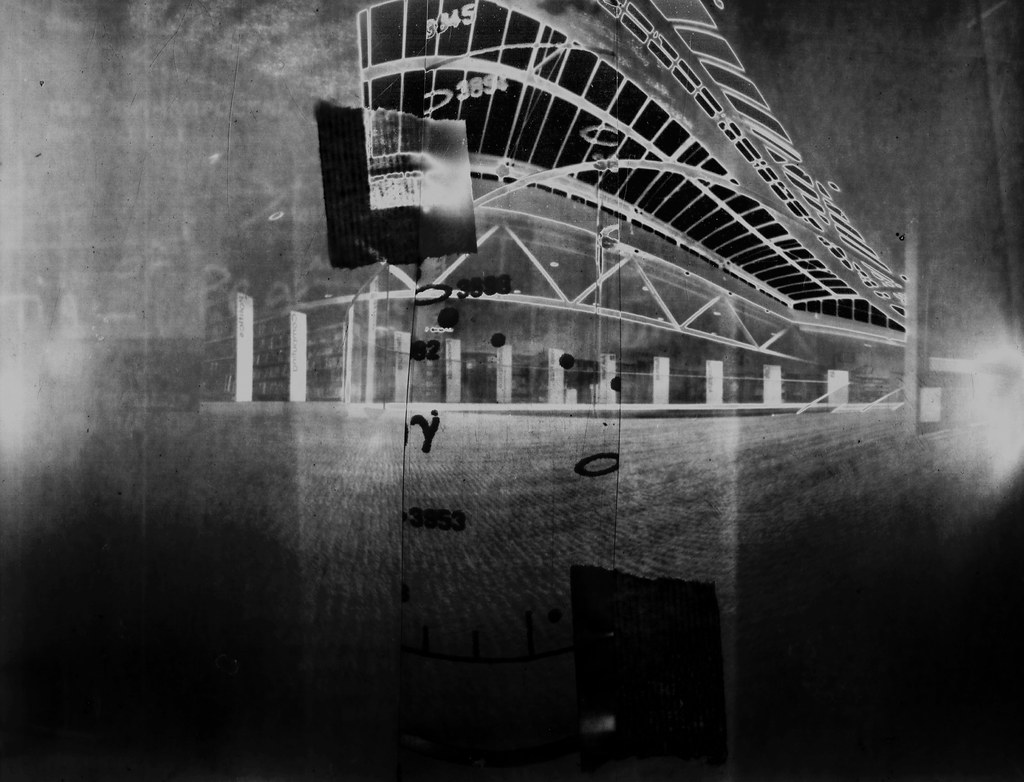
The Architecture of Interior Spaces. by Russell Moreton Via Flickr: Pinhole Photography, Winchester Discovery Centre and Library. russellmoreton.blogspot.com Analogue : On Zoe Leonard and Tacita Dean. Margaret Iversen 2012 murrayguy.com/wp-content/uploads/2013/01/Iversen-Critical... "The imprint of light on emulsion" "The alchemy of circumstance and chemistry" Tacita Dean : Filmworks, Kodak Analogue, page 96/97

Spacegendervoid: a feeling of space and stars but in a far away sort of way. Almost like a void that vaguely resembles space and the stars themselves and leans towards a nonexistent/agender feeling. The main aspects being, space, vaguely existing somewhere outside of gender, and sort of not really there like a void in time. A nonbinary gender that is connected to space, stars, and the universe as a whole. This gender feels vaguely unaligned in nature and has ties to the feeling of genderless-ness.
Voidmasculine (openmasc/queermasc/voidmasc): Identifying with masculinity but being unsure what exactly your gender identity is, it is a great and dark mystery long forgotten in your eldrich mind. The only thing in this existence that understands your puzzling feelings is the Void.
Genderspace: an umbrella term for genders that are influenced or related to different parts of space, such as genderstar, gendergalaxy, genderconstallation, gendermoon, genderplanet, etc. the ending could be replaced with specific bodies for even more specific terms, like gendermars or gendercallisto.
Check out an incomplete unupated list of uingenders here for completing the unknown feelings. ~ap


The garden is the smallest parcel of the world and then it is the totality of the world. The garden has been a sort of happy, universalizing heterotopia since the beginnings of antiquity...
Foucault - Of Other Spaces: Utopia and Heterotopia
Anya is live and ready to show you everything. Watch her strip, dance, and perform exclusive shows just for you. Interact in real-time and make your fantasies come true.
Free to watch • No registration required • HD streaming

Wanda Stolle

Journey’s immersive spatial design, which allows players to both internalize its components and inhabit its world, culminates in its telling the story of its own experientiality. Henry Jenkins writes about different spatial narrative techniques possible for game worlds to adopt, and the one relevant in Journey’s case is embedded narrative (Jenkins 8). An embedded narrative is when the architecture of the game world traces in its structure a pre-determined story that is to be discovered by players (9). Ruins, which Journey’s game world is rich in, carry an embedded narrative, no doubt, and yet, if internalizing and inhabiting Journey’s game world thus far has primed players for anything, it would be to view ruins as Elizabeth Scarbrough suggests we do.
Scarbrough argues that ruins could be viewed as memento mori, as reminders of lack, but they could also be appreciated for what they are rather than for what they once were (446). To engage aesthetically with ruins does not require placing value on how and what the buildings originally were. No historical knowledge is required for us to engage with ruins either (447). In addition, Scarbrough agrees that the nostalgia that ruins evoke is important, but so is ephemerality (448). Therefore, she suggests that focusing our attention on the past when engaging with ruins could rob us from the opportunity to appreciate them in the present-tense.
On experiencing Journey’s spaces.